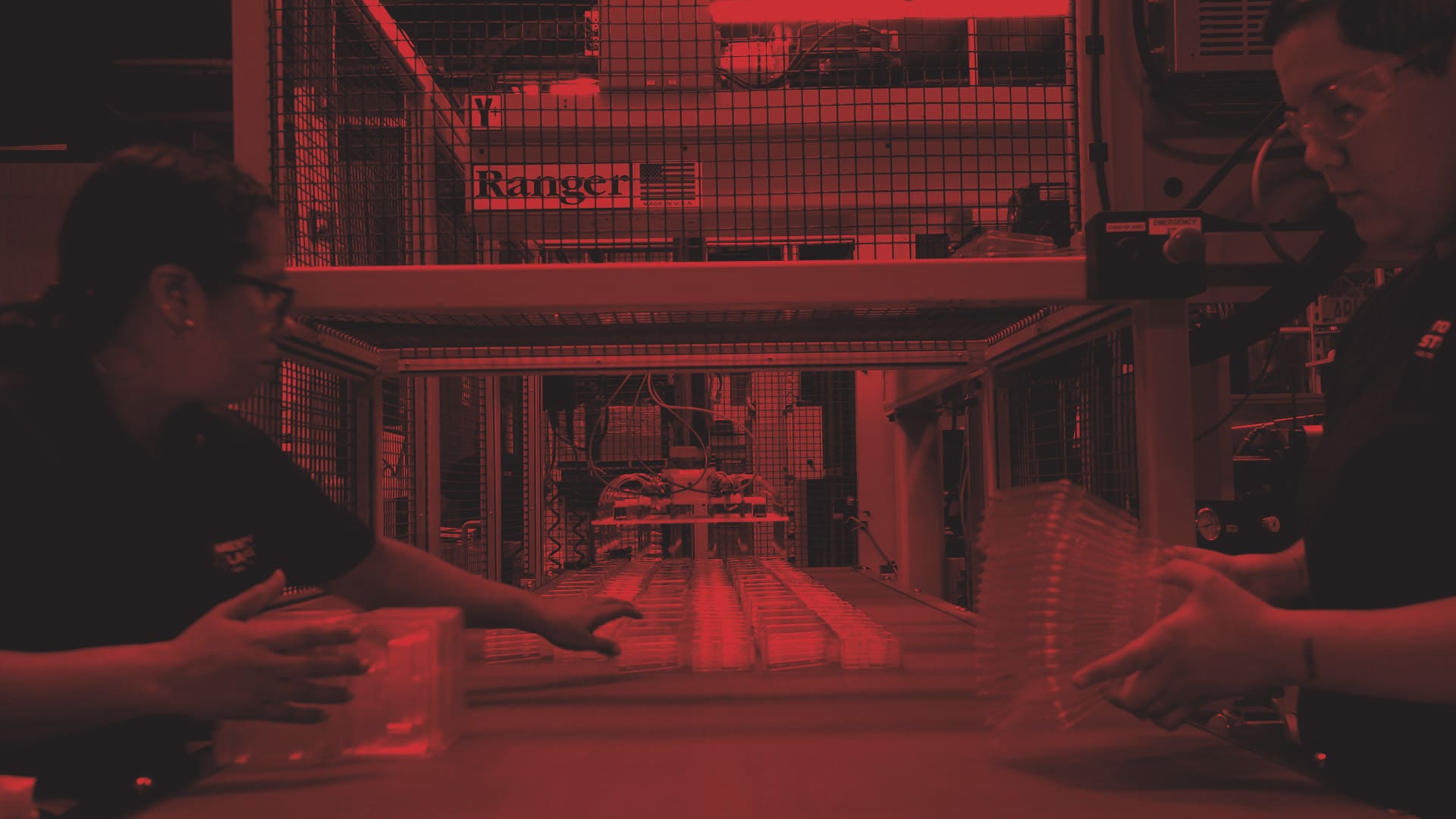
At Jamestown Plastics, the comparison starts with the part and the process around it. How the component is packed, transported, unloaded, and stored, and how the packaging is returned, helps determine which packaging approach makes sense.
How Returnable and Disposable Packaging Differ
Expendable packaging is generally purchased for a single shipment or a limited number of uses. Corrugated inserts, foam, bags, and other protective materials often fall into this category.
Returnable dunnage follows a different cost pattern. Thermoformed transport trays hold parts in defined positions through shipping and handling, then return for another cycle. Depending on the tray design and part geometry, loaded trays may stack and empty trays may nest to reduce storage and return-shipping volume.
With expendable packaging, material cost starts over with every shipment. Returnable plastic trays place more of the spend at the beginning and spread it across completed trips.
The comparison gets broader from there.
Return freight and cleaning add recurring costs to a reusable system. Tray loss reduces the number of completed turns. Disposable packaging brings ongoing material, labor, and disposal expenses, while packaging-related damage raises the cost of either approach.
When Returnable Packaging Starts to Make Financial Sense
Returnable packaging starts to make financial sense once the tray completes enough trips to offset the higher upfront investment. Established shipping lanes make reuse easier because packaging moves between known locations and already has a practical path back.
Automotive supply chains often fit this model. Industrial, electronics, and consumer-goods operations can work the same way when parts or products move repeatedly between the same facilities. Volume helps, but it does not settle the decision. A high-volume route with expensive return freight can still produce a poor cost per trip, while a lower-volume application involving expensive parts may recover the investment sooner when better protection reduces scrap or rework.
Turnaround time is also important. A tray returning every week creates usable trips much faster than one sitting at the receiving facility for a month. Slow returns also mean more trays are needed in circulation to keep production moving.
There is no standard number of trips required for payback. The break-even point changes with the upfront tray cost, the cost of the expendable package it replaces, and the recurring expense of keeping the returnable system in circulation.
Calculating Returnable Packaging ROI
Cost per trip gives procurement and operations a more complete comparison than unit price.
For reusable industrial packaging, the calculation starts with tray inventory and any applicable tooling cost, divided across the expected number of completed trips. Return freight, cleaning, handling, and replacement trays are added afterward.
Disposable packaging starts over with each shipment, so the calculation includes material, pack-out labor, disposal or recycling, and packaging-related damage.
A basic break-even formula looks like this:
Break-even trips = initial returnable packaging cost ÷ (disposable cost per trip – recurring returnable cost per trip)
While the formula itself is simple, it’s the assumptions behind it that become more specific.
A useful cost-per-trip comparison needs real operating numbers: annual shipment volume, expected turns, current packaging and labor costs, damage history, return freight, cleaning, storage, and the percentage of trays expected to be lost or replaced.
A tray designed for a long service life does not deliver the expected value if it is frequently lost, damaged, or held out of circulation. Repeated drops, heavy loads, poor storage, and incompatible cleaning methods shorten usable life and push the effective cost per trip higher.
How Returnable Dunnage Affects Product Protection
Custom thermoformed dunnage gives each part a defined position inside the package. Formed cavities limit movement during transport and keep vulnerable surfaces from contacting each other, while the tray provides clearance for sensitive features without loose protective material.
Consistent positioning also helps after delivery.
Parts arriving in a repeatable orientation require less sorting before the next manufacturing step. In automated cells, the same tray geometry supports robotic picking and line-side presentation when the package is designed around the equipment.
Packaging-related damage also creates costs outside the packaging budget. Rework uses labor and production capacity. Replacement shipments add freight, and extra inspection slows the part before it moves forward.
Those costs belong in the same comparison as the tray or box itself.
Reverse Logistics Changes the Cost
A returnable tray only creates value when it comes back.
The return route affects how many trays need to stay in circulation, how quickly they are available for reuse, and how much empty packaging costs to move. Existing backhaul keeps the process more efficient because trays return on equipment already headed in the right direction. Dedicated return shipments create a separate freight expense.
Empty trays also need space somewhere in the system. Nestable designs reduce the cube required for storage and return transport when the part geometry allows it, especially when large numbers of trays are moving through the loop.
Tracking connects directly to the same cost picture. Lost trays remove future trips from the system and raise the effective cost of the remaining inventory, so ownership and responsibility for return need to be clear from the beginning.
Cleaning and Reuse
Reusable thermoformed trays can be cleaned and returned to service when the material and cleaning process fit the application.
Requirements change with the part and production environment. A tray used for machined industrial parts faces different contamination concerns from packaging used around electronics or medical applications, so material selection and tray geometry should reflect how the package will actually be cleaned.
Corners, recessed features, and drainage areas influence how easily residue leaves the tray. The material itself also needs to tolerate the cleaning process without losing dimensional stability or physical performance.
Inspection remains part of the loop. Cracked, warped, or excessively worn trays need to come out of circulation before they affect part protection or handling.
Where Disposable Packaging Still Fits
Some shipping patterns don’t support a practical return loop.
One-way shipments are the clearest example, especially when packaging travels to many customer locations and collecting empties would require separate freight. Low-volume projects can create the same problem because the reusable investment does not get spread across enough trips.
Part changes affect the calculation in a different way. A custom thermoformed cavity is designed around a specific geometry, so a significant revision to the component can shorten the useful life of the existing dunnage if the new part no longer fits.
Many operations use both approaches. Stable routes with predictable return patterns use reusable dunnage, while one-way or irregular shipments remain on expendable packaging.
Sustainability Depends on the Whole Loop
Reuse changes the amount of packaging material moving through an operation. A returnable tray replaces repeated purchases of expendable packaging over its service life, which reduces the volume of single-use material entering the waste stream.
Cleaning and return transportation still consume resources. Lost trays, replacement packaging, and end-of-life disposal also affect the packaging lifecycle cost.
A sustainable industrial packaging strategy should account for the full loop rather than assuming reuse is automatically the lower-impact choice in every application.
Compare the Packaging Around the Part and the Route
The right packaging approach depends on how the part moves through production, shipping, handling, and return.
Returnable systems work well when trays complete enough trips and protect the part consistently throughout the loop. Disposable packaging fits routes where return freight, storage, or handling would add too much cost.
At Jamestown Plastics, we design custom thermoformed dunnage around the component and the process surrounding it. Share the part, shipment volume, and return route with our team, and we can use those operating conditions to help determine which packaging approach fits the application.